
Hurricane Andrew’s impact in 1992 led to a significant overhaul of building codes in Florida. The adoption of the Hurricane Andrew: 30 Years of Stronger Building Codes, mandating hurricane-resilient features for new constructions. Lax enforcement prior to Andrew contributed to the destruction of thousands of homes.
“Andrew changed building codes and especially building code enforcement, which Andrew proved to be inadequate, incompetent, or avoidant.”
Richard Olson, Director, International Hurricane Research Center, Florida International University (FIU)
The FBC introduced high-velocity hurricane zones (HVHZ), requiring resilient products in vulnerable areas. Subsequent updates in 2015 prioritized energy efficiency and impact resistance, maintaining Florida’s leadership in hurricane-related building codes. Despite advancements, Southeast Florida remains vulnerable to flooding due to higher storm surges and torrential rainfall from modern hurricanes.
Key Hurricane Andrew: 30 Years of Stronger Building Codes Takeaways:
- Hurricane Andrew's devastation in 1992 prompted a redesign of Florida's building codes. The adoption of the Florida Building Code (FBC) in 2002 mandated hurricane-resilient features, marking a significant shift from over 400 disparate codes.
- The FBC not only introduced high-velocity hurricane zones (HVHZ) but also required HVHZ products in vulnerable areas, ensuring robust standards for windows, doors, and roofs. Prior to Andrew, lax enforcement contributed to the destruction of thousands of homes.
- Despite vulnerabilities to flooding in Southeast Florida, the state now leads the nation in hurricane-related building codes and enforcement, according to the Insurance Institute for Business and Home Safety (IBHS).
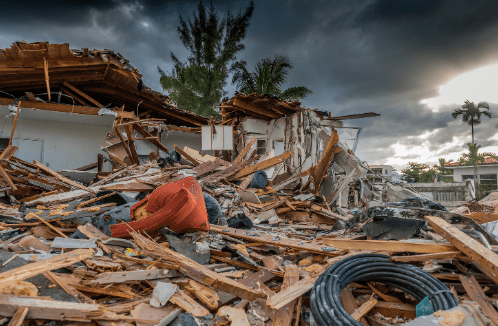
To address evolving threats, a new hurricane testing facility, the NICHE facility at Florida International University,Hurricane Andrew: 30 Years of Stronger Building Codesagainst extreme wind, surge, and wave events.
Thirty years after Hurricane Andrew devastated South Florida in 1992, the state’s skyline—and its building regulations—tell a story of resilience, reform, and readiness. The Category 5 hurricane, with winds exceeding 165 mph, tore through Miami-Dade County, destroying more than 63,000 homes and damaging over 124,000 others. In its aftermath, Florida realized that the key to surviving future storms wasn’t just better forecasting—but stronger buildings.
Today, Florida’s modern building codes are among the toughest in the nation, serving as a model for other hurricane-prone states. Let’s explore how Hurricane Andrew reshaped the construction industry, the evolution of Florida’s building codes, and how these changes continue to protect lives and property three decades later.
The Wake-Up Call: Hurricane Andrew’s Devastation
Before 1992, Florida’s building standards were inconsistent. Each city or county enforced its own set of codes, often outdated or poorly supervised. Hurricane Andrew exposed the flaws in this fragmented system. Entire neighborhoods in Homestead and South Miami collapsed under extreme winds—not because of their location, but because of weak construction practices.
Investigations revealed that many homes were built with substandard materials, inadequate roof fasteners, and poor oversight. Inspectors were often overworked or untrained, leading to widespread violations. The result was catastrophic: over $26 billion in damages and more than 60 deaths.
Andrew’s devastation became a turning point. The disaster sparked a complete overhaul of Florida’s building regulations, changing not only how structures were built but also how they were inspected and enforced.
The Birth of the Florida Building Code
In the years following Hurricane Andrew, state officials, engineers, and construction experts came together to design a unified, science-based building code. The Florida Building Code (FBC) replaced local codes with one comprehensive statewide standard.
The FBC required that all new construction in hurricane-prone regions meet rigorous wind-resistance and impact requirements. Key reforms included:
Stronger roof-to-wall connections: New buildings had to include hurricane straps and clips to secure roofs to walls, reducing uplift forces during high winds.